Cost-discipline stories usually arrive dressed as austerity, and that is not what this cycle is. Nobody in these six items argues for fewer tokens as a virtue. They argue that somebody specific should have to approve the spend, and that the approval should land before the tokens burn rather than after the invoice explains them.
The shift shows up in plumbing more than rhetoric. A guardrail used to be a code review; this cycle it is a declined transaction, a timeboxed experiment, a scoped agent, or a router rule. Read each story for who holds the authority — that is the variable that actually moved.
What mattered this week
AI Agents Just Got Their Own Company Credit Cards
Mercury's Agent Cards hand an agent a virtual card it can spend from inside limits the company sets, with out-of-policy transactions declined at the point of sale and no path for the agent to raise its own ceiling. The interesting part is not the card. It is that the guardrail moved out of the codebase and onto the payment rail, where a finance team can enforce it without reading a diff.
Takeaway: Two meters are converging and most teams run neither: what the company burns on model calls, and what its agents authorize downstream. A decline at checkout is a cruder control than a well-written loop guard, but it is the one still standing when the loop guard is the thing that broke.
Read source noteBeyond token-maxing: How US Bank AI chief navigates costs
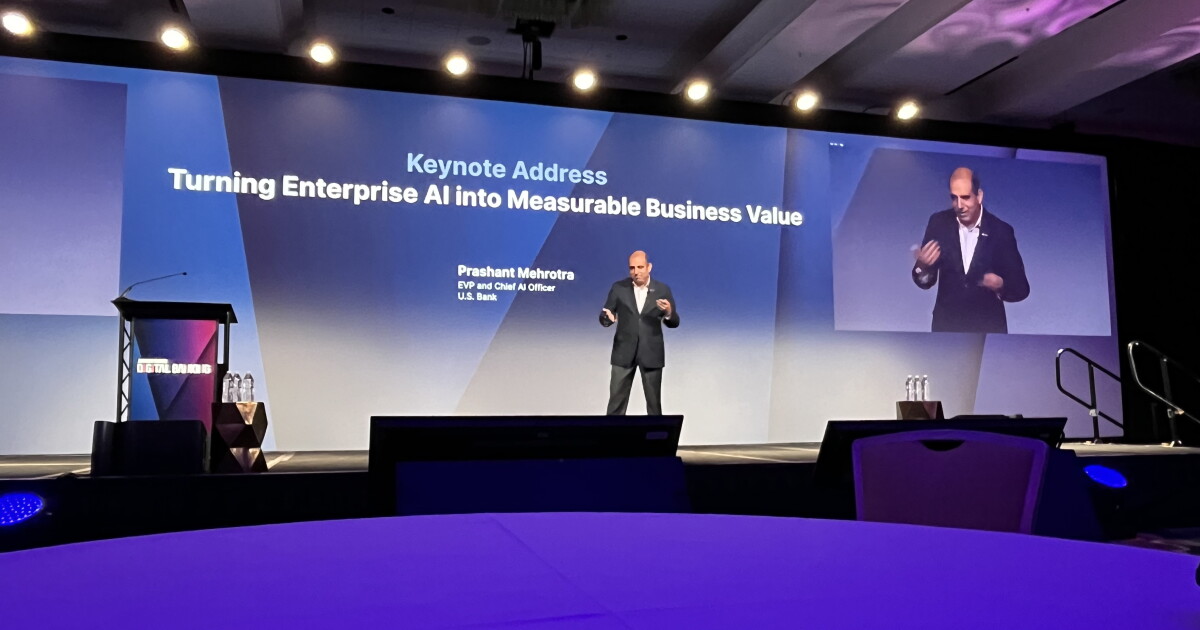
U.S. Bank's chief AI officer claims the institution skipped the token-maxing phase entirely. Candidate use cases get triaged into three piles — revenue, savings, and things that merely feel efficient — and only the first two ever see money. It is an unusual look at cost discipline from the buying side of the table rather than from a vendor with routing software to sell.
Takeaway: What governs the decision is how often something runs, not how impressive it looks: a showpiece firing once a month ranks below repetitive work with a number attached to it. Pilots carry an expiry date and get switched off when they miss, so the money question is settled before the first token is spent. Read it with the format in mind, though — a Q&A yields no independent figures to test any of it against.
Read source note‘Modelmaxxing’ Replaces ‘Tokenmaxxing’ for Firms Grappling With AI Costs
The rename is the substance. Buying behaviour has moved from stockpiling tokens toward shopping per task, which quietly relocates model selection out of engineering taste and into the procurement function. IDC's panel of 260 decision-makers at US companies over a thousand employees puts 47% already running a Chinese model somewhere in the stack, with a fifth relying on them heavily.
Takeaway: The spread doing all the work is roughly five dollars per million output tokens at the DeepSeek and Qwen end, against twenty-five to thirty at the GPT 5.5 and Claude Opus end. One caution for anyone quoting this: the China-adoption number and the routing-adoption number come from two separate polls with different sample sizes, and they tend to get cited as though they were a single study.
Read source noteToken-maxing is an AI cost sink - how to use agents without busting your budget
A tenfold year-over-year jump in one vendor's bill — described by the Boomi chief executive who paid it as a rate nobody can sustain — is the kind of figure buyers usually round off before saying it in public. The mechanic underneath is that agentic workloads consume on a different order from chat, so the damage accrues below whatever threshold anyone thought to alert on.
Takeaway: The lever these operators keep returning to is definition rather than limitation. Point an agent at a vague standing question and it will grind through everything available to produce very little; give it one territory and one job and the bill and the output improve together. Telling, too, that none of them wants a hard ceiling — they want staff who can watch the meter while they work.
Read source noteWhat You Cannot See Will Break Your LLM App: A Practitioner Guide to Production Observability
The framing worth taking from this one is that runaway spend is usually a bug rather than a budget choice. An oversized document silently riding along on every call, or a conversation loop nobody meant to leave open, will multiply consumption between one night and the next — and none of it surfaces, because the service is still answering normally and the operational dashboards all read healthy.
Takeaway: What makes it useful is that the thresholds are actually specified, which is more than most internal runbooks manage: wake someone when the hourly rate hits three times normal, treat a fifth of drift in a workflow's p95 as a problem rather than noise, and investigate truncation while it is still rare. The companion warning is that scoring output with another model is itself inference — sample it, or your observability becomes its own line item.
Read source noteThe End of Token Maxing: Why Pragmatic AI Engineering is Replacing Frontier Models
The picture drawn here is of buyers demoting the default frontier model and putting compressed, task-specific ones behind a routing layer that chooses by rule instead of by habit. Nobody is arguing for less AI; the argument is against paying a premium for output you would have received anyway. A run that consumes forty times what the job needed has not made a decision — it has inherited one.
Takeaway: Their sharper point is that the abstraction layer is defensive, not merely tidy: an application welded to a single vendor endpoint breaks on somebody else's deprecation notice or silent retune. Reserve the very large context windows for exploratory work, and let the predictable, repeated jobs settle onto cheaper tiers.
Read source noteWhere the next move is
The frontier comeback we reported last month did not hold.
Our OpenRouter snapshot, pulled this morning and covering rankings through September 14, no longer has an Anthropic model anywhere in the top twelve. A month ago Claude Opus 5 sat third at roughly 793 billion tokens a day and we wrote that up as the frontier tier returning to a board it had vanished from. Google has slipped too: Gemini 3.8 Flash is eleventh at about 300 billion, against 3.6 Flash's 501 billion and ninth place in August. Chinese labs now account for 71.7% of daily tokens across the top twelve, led by DeepSeek, Tencent's Hunyuan line, Z AI's GLM and Xiaomi's Mimo.
- This is one surface, not the market: OpenRouter under-represents direct enterprise API traffic, which is exactly where frontier volume concentrates.
- The Daily Upside's July survey found 47% of large US firms already running a Chinese model. This board is what that intent looks like once it becomes measured traffic.
- DeepSeek V4.1 Flash shipped on September 10 and already ranks fifth by daily tokens on a 30-day total of just 6.2 trillion, so that ramp is days old and worth re-checking.
- Treat month-old routing claims as expired, ours included — this board reversed inside four weeks.
The tooling is converging on explainability.
The seventeen projects the desk tracks — litellm, langfuse, langgraph, promptfoo, dspy, tiktoken, qdrant and the rest — matter less as a shopping list than as evidence of what teams are being asked for. Gateways, tracing and eval harnesses are all answers to the same question from a finance partner: which workflow spent this, who owns it, and what did it return?
- Gateways turn model choice into policy that survives the engineer who set it.
- Tracing makes spend attributable to a workflow, an owner and an accepted artifact.
- Eval harnesses are what stop a cost reduction from becoming a silent quality regression.
Move the approval in front of the burn.
Every story above pulls one decision earlier. U.S. Bank kills the use case before funding it, Mercury declines the charge at the till, ZDNET's operators scope the agent before it runs. The portable version is to fix the ceiling and the acceptance test up front, then record what actually came back against them.
- Give every recurring agent workflow a named owner — the budget line with nobody's name on it is the one that surprises you.
- Gate on frequency before sophistication: dull, high-volume, measurable work pays for itself; monthly showpieces rarely do.
- Instrument both meters — what you spend on model calls, and what your agents authorize downstream.
- Alert on rate of change rather than absolute spend, so a tenfold defect pages you in the hour it starts.
Why this issue reads a month wide.
The desk's collection and promotion routines stopped committing on August 17 and only came back today, so this issue works through a four-week backlog rather than a clean seven-day window. Every story cited is source-linked and none has run in a previous briefing, but the dateline spread is real and worth flagging rather than papering over. The router snapshot is the exception — it is live, pulled this morning through September 14.
- Search Console, Ahrefs, PostHog and the model rankings all refreshed cleanly this run. The gap was in publishing, not in collection.
- 206 candidates are still queued for review, so the backlog gets worked down across the next few issues rather than dumped into one.
- SEO watch: four pages now rank top-eight for “tokenmaxxing” and split the intent between them, with /guides sitting at position 3.8 on 4,045 impressions and zero clicks. The ranking is not the problem; the click is.
Read the token-spend tracking guide
Turn this issue into a working dashboard: owner, ceiling, model, retries, cache behaviour, and the artifact you actually accepted.
Continue reading