Research and source-linked notes about why coding agents, tool loops, retries, and long context can make LLM usage unpredictable.
66 source-linked itemsOriginal annotations with outbound attribution
6 related projectsOpen-source tools that match the topic
Search intentSearchers want to understand why AI agents can burn tokens quickly and how to control agent loops.
Topic brief
What this page is watching
Searchers want to understand why AI agents can burn tokens quickly and how to control agent loops.
Why agents are different
An agent does not just answer once. It can inspect files, call tools, retry, summarize, branch, and repeat, which makes spend less predictable than a single chat completion.
How teams control it
The practical controls are loop limits, trace review, task-level budgets, cheaper routing for low-risk steps, and evals that catch expensive failures.
Latest sources
Feed items for Agent Token Burn
long-formEC
long-form
Enterprise AI budgets break at the handoff to production
Express Computer interviews New Relic India's Ganesh Narasimhadevara on why AI bills keep climbing while the blended cost per million tokens has fallen over a year, from $18.40 in Q1 2025 down to $6.07 in Q1 2026.
Cisco's Splunk adds Tokenomics to track coding-agent token spend
At Splunk .conf on Sept. 15, Cisco added a Tokenomics module to Splunk Agent Observability. It attributes token spend across AI agents and across employees' use of coding agents, naming Claude Code, Codex and Cursor.
Claude Code was using 51,000 tokens before I even typed a prompt — I fixed it
Mahnoor Faisal opened a new Claude Code session, ran /context, and found 51,400 tokens already loaded. Disabling four test plugins and auto-memory got the starting context down to roughly 41,400 before any real prompt.
Mercury launched Agent Cards through Mercury Spend: virtual cards an AI agent spends from inside company-set rules, with transactions outside them declined automatically and no way for the agent to raise its own limit.
Route AI agents across models with NVIDIA NeMo Switchyard
NVIDIA shipped NeMo Switchyard, a provider-agnostic SDK that escalates agent steps from cheap models to frontier ones only when a task demands it. LangChain benchmarked it over 145 multi-turn agentic tasks.
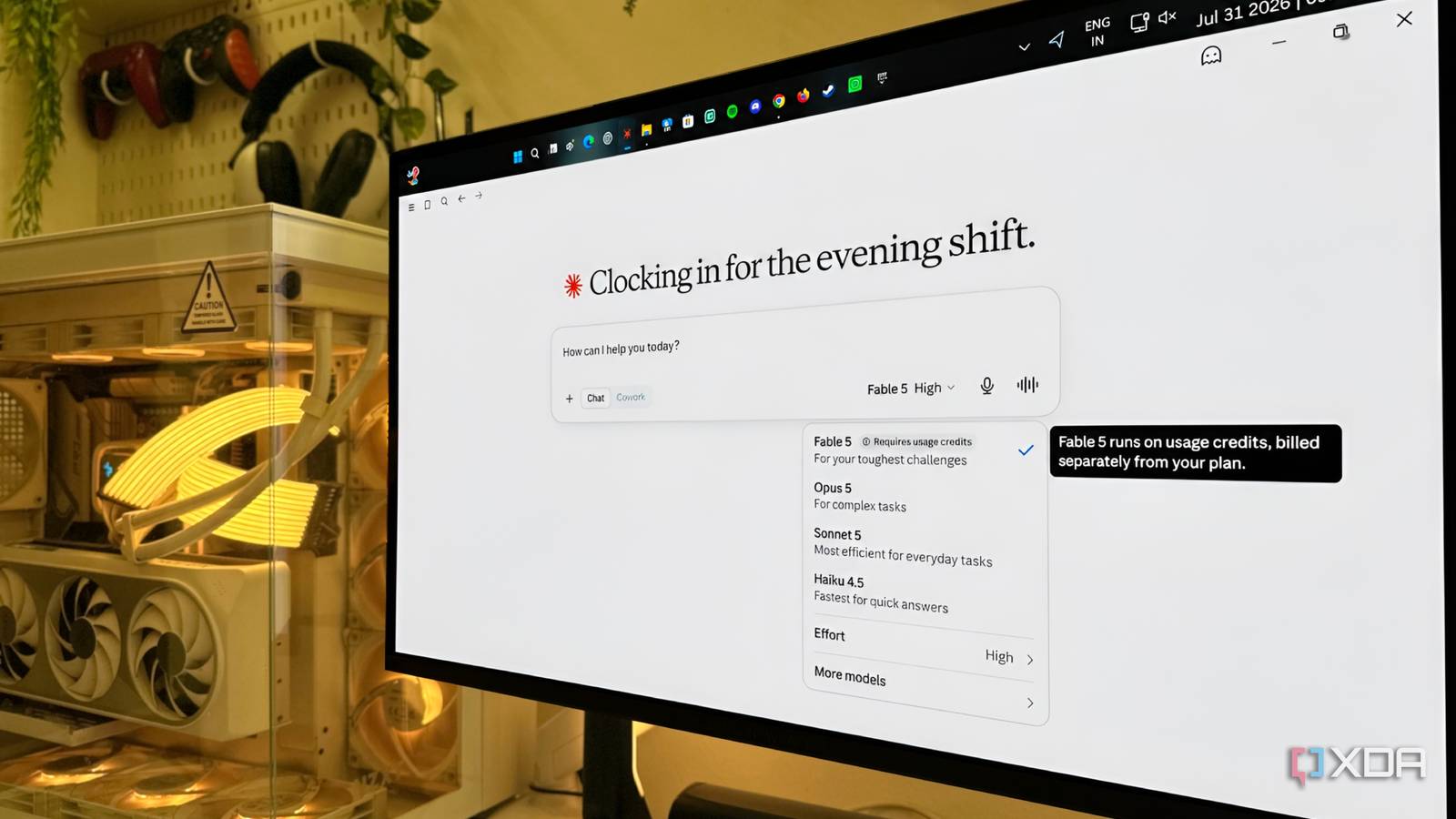
Dropping Claude Code from High to Medium effort cut output tokens 45%
XDA's Mahnoor Faisal ran five coding jobs on Sonnet 5 twice from an identical starting codebase, changing only the effort level. High spent about 26,000 output tokens; Medium finished the same work on roughly 14,300.
Token Monitor - An ESP32-S3 desktop display that tracks AI coding assistant usage (Crowdfunding) - CNX Software
Fractal Manifold is crowdfunding Token Monitor, a EUR 99 ESP32-S3 desk display with a 4-inch touchscreen that shows quota use, session limits, reset timers and estimated token costs for Claude Code, Codex CLI and Antigravity CLI.
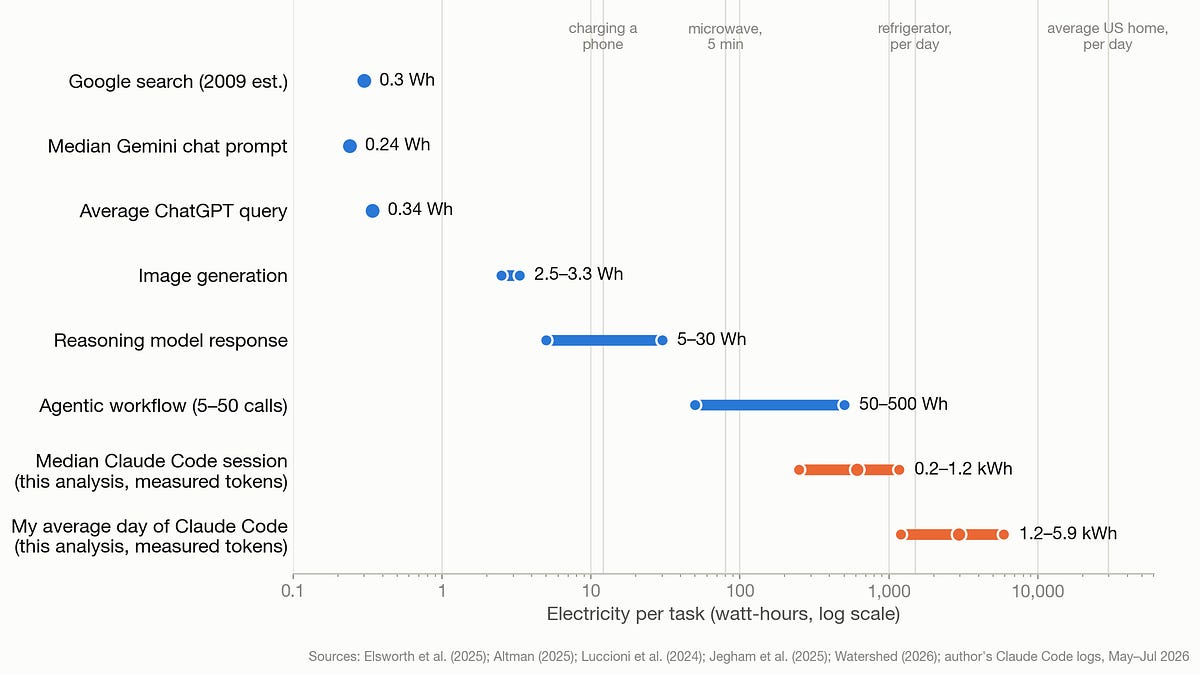
Climate scientist Zeke Hausfather metered his own Claude Code habit: 1,138 typed prompts fanned out to more than 14,000 model calls and 3.2 billion tokens in eight weeks, drawing roughly 170 kWh of data-center electricity.
Token-maxing is an AI cost sink - how to use agents without busting your budget
ZDNET asks enterprise leaders how to run agents without wrecking the budget. Boomi CEO Steve Lucas says he spent ten times more on Claude last year than the year before, and calls that pace flatly unsustainable.
Claude Code Was Burning Tokens Until I Put a Gate in Front of It | HackerNoon
Prateek Kapoor wrapped Claude Code in a PreToolUse hook that rejects unbounded greps and whole-file reads, hands the agent a corrected command, and reports 75% to 80% lower token use on heavy editing tasks.
Anthropic shipped Claude Opus 5 on July 24 priced level with Opus 4.8, pitching near-Fable 5 intelligence at half the price. Its own Frontier-Bench v0.1 figures show more than double the predecessor's score, and cheaper per task.
ContentGrip's Lena Marlowe reports agencies have moved past whether to use AI to whether they can prove it pays for its own token bill. Accountability, not adoption, is now the hard part.
rtk Raises Claude Code Costs at Low Effort: JetBrains Benchmark Debunks 60–90% Claim
A JetBrains benchmark (July 20) ran ‘rtk,’ a proxy marketed to cut Claude Code tokens 60–90%, across 425 billed trials. At low effort it made sessions a median 7.6% MORE expensive—while rtk’s own analytics logged 96.2M tokens ‘saved.’
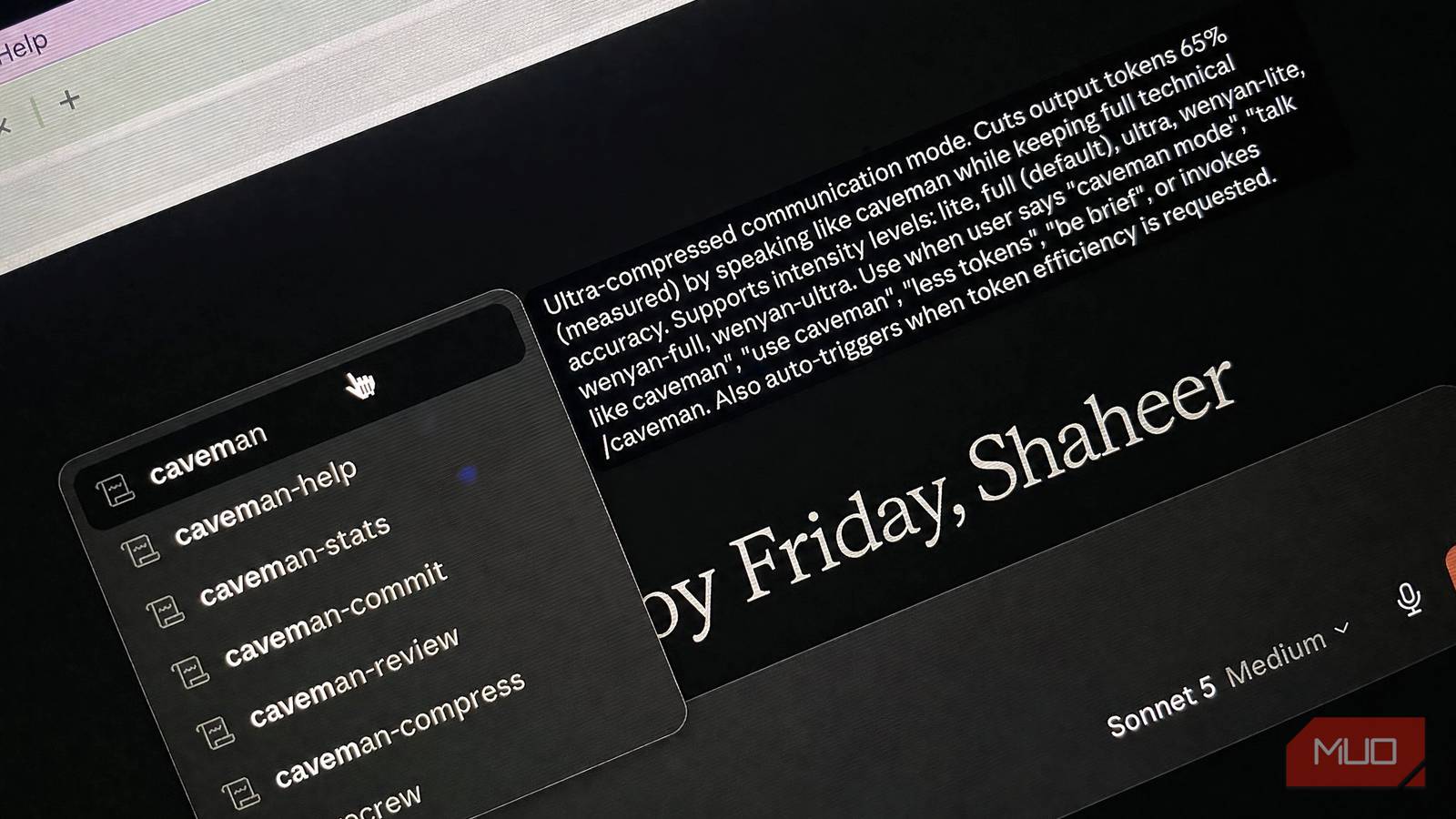
I taught Claude to talk like a "caveman" and ended up saving 70% of my output tokens
MakeUseOf benchmarked a community caveman plugin for Claude against normal and terse prompting, counting input and output tokens for a single prompt and then averaged across ten prompts.
20VC x SaaStr This Week : Apple Sues OpenAI, the Token-Maxing Era Begins, and the TAM Question Hanging Over AI Coding
On the 20VC/SaaStr podcast, Jason Lemkin, Harry Stebbings and Rory O'Driscoll call the budget era: ClickHouse has grown its AI bill 60-fold since February, while the best engineers keep 10 to 20 agents busy overnight.
AI Agents Need a Gateway, and Citrix Is Putting NetScaler in the Middle
Citrix said on July 9 that NetScaler AI Gateway now carries an MCP Gateway, steering agent traffic to approved MCP servers while metering input and output tokens per team, user, or app across rival model providers.
After ‘Tokenmaxxing’, Token Spend Has Become The New Metric To Watch
Forbes contributor Tim Keary argues the tokenmaxxing push has flipped into cost discipline: with CFOs and boards watching, firms now track token spend per engineer and blend premium and cheaper models instead of maximizing usage.
Anthropic launched Claude Sonnet 5 on June 30, priced at $2/$10 per million input/output tokens through Aug 31, then $3/$15. It pitches the model as approaching Opus 4.8 quality at a lower price.
AWS maps three layers of Bedrock token-cost visibility
Rachanee Singprasong and Chitresh Saxena lay out three layers of Bedrock cost visibility: native CloudWatch metrics plus CUR 2.0 caller-identity attribution, then model invocation logging, then OpenTelemetry in the client.
Why Token Optimization Is a Gift to the Hyperscalers
UncoverAlpha's Rihard Jarc argues the pivot from tokenmaxxing to token optimization — routing cheap work to cheaper models — won't shrink AI bills. It multiplies token volume, and the hyperscalers renting the compute collect either way.
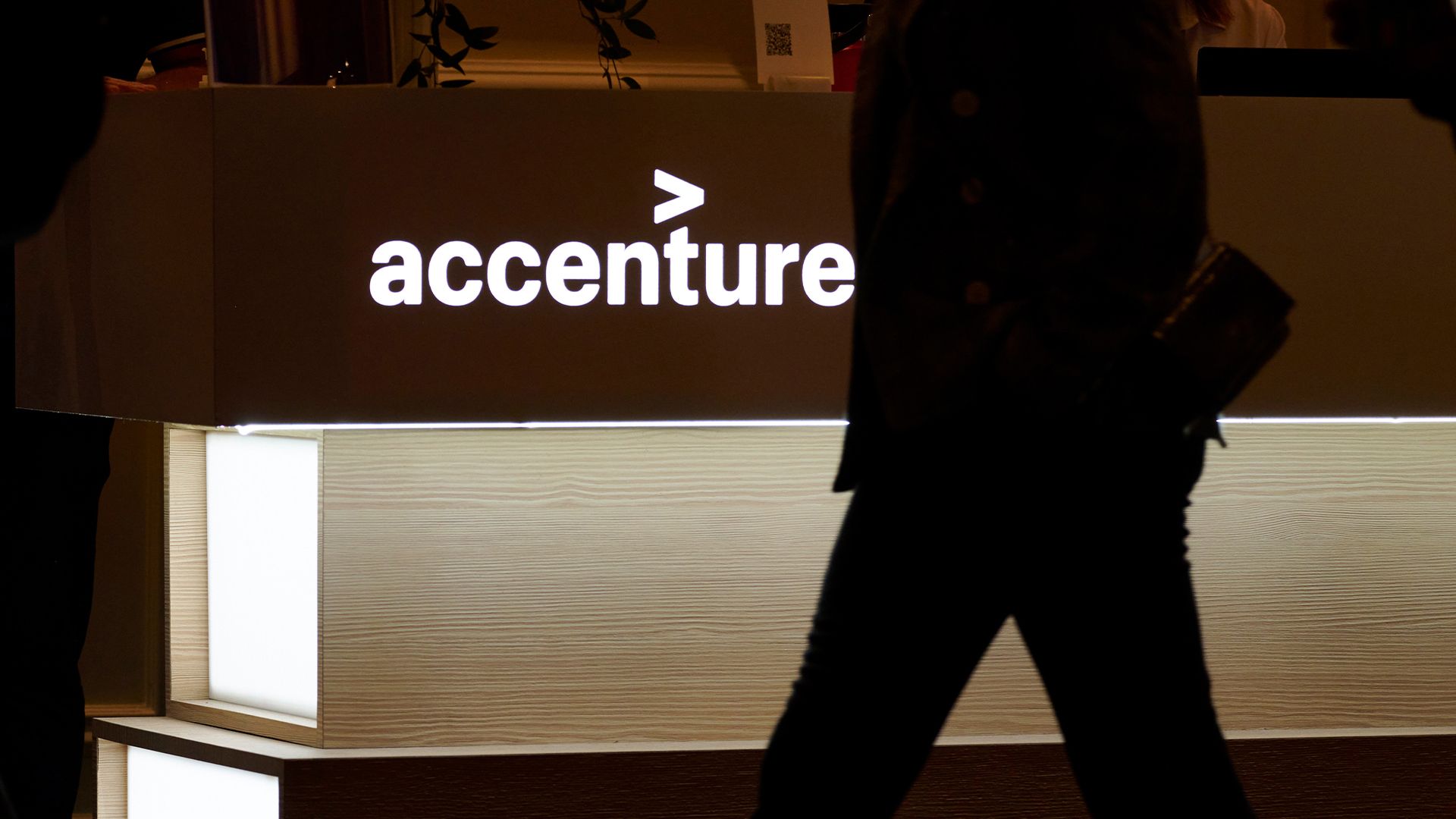
‘What we’re seeing right now is just rapid escalation in AI token spend’: Accenture tells staff to stop using AI for unnecessary tasks amid surging costs
Leaked internal audio, reported by IT Pro via 404 Media, shows Accenture telling staff to stop burning AI tokens on low-value work like turning PDFs into slide decks, as its agentic-AI lead flags a sharp jump in token spend.
Anthropic’s Economic Index maps the daily cadences of token use
Anthropic’s June 2026 Economic Index ties Claude use to real-world rhythms: 93% of chats yield an artifact, marketing-manager sessions burn ~2.5x the tokens of editors, and app-building runs over 3x the median conversation.
AI cost challenges mount as agent use gets more complex: KPMG
KPMG’s Q2 AI Pulse (204 US leaders at $1B+ firms) finds twice as many companies now running fleets of coordinated agents — up to 18% from 9% — yet only 26% can see in real time what AI at scale actually costs them.
Companies spent months pushing workers to use AI more. Now the token Hunger Games could be coming.
Business Insider reports the workplace swing from “use more AI” to rationing: Pylon set token caps to dodge a $1.4M bill, Coinbase and Walmart added limits, and “tokens” surfaced in 129 Q2 earnings calls — up from 57 a quarter earlier.
Analyzing Claude Code usage with CloudWatch and OpenTelemetry | Amazon Web Services
AWS engineers detail how to export Claude Code OpenTelemetry metrics into CloudWatch via bearer-token API keys, tracking claude_code.token.usage and cost.usage per developer — under $15/month for a 200-person org.
Anthropic "pauses" token-based billing for its Claude Agent SDK
Anthropic paused its plan to move Claude Agent SDK power users onto metered API pricing, updating its billing page to put the rollout on hold while it reworks how heavy agent usage is charged on subscription plans.
‘Pretty Crazy’ Token Usage Is Testing Bosses’ Bet on AI
WIRED maps the new 'tokenomics' scramble: across earnings calls and C-suites, companies from 8x8 to Cisco are tallying soaring AI token bills, some celebrating savings, others slapping on usage caps.
Ramp Raises US$750m to Build Gen AI Infrastructure - AI Magazine
TechCrunch reports Ramp raised $750M at a $44B valuation, with CEO Eric Glyman casting cross-provider AI token-spend monitoring as Ramp's new 'third pillar' product.
Anthropic shipped Claude Fable 5 (GA, with classifier safeguards) and Claude Mythos 5 (safeguards lifted, vetted partners only) on June 9 — $10 per million input tokens, $50 per million output, under half the Mythos Preview price.
How Ramp is Fuelling AI Spend Management Expansion
Ramp closed a $750M round at a $44B valuation and is launching AI token spend management, procurement agents, and accounting agents on top of $1B+ annualized revenue and 70,000+ customers.
How Much Do AI Tokens Cost Businesses? 2026 Spending Benchmarks
Ramp's June 2026 benchmarks from thousands of customers: median AI spend is $2,246/month but the average is $140,842, skewed by heavy users. Blended token prices average $0.72 per million—$0.07 for GPT-5-nano, $1.42 for GPT-5.5.
15 AI Agent Observability Tools in 2026: AgentOps & Langfuse
AIMultiple compares 15 observability platforms for LLM apps and AI agents, emphasizing traces, dashboards, and real-world instrumentation tradeoffs rather than treating monitoring as a generic logging problem.
Mercor CEO: token spend will top headcount spend within five years
On the 20VC podcast, Mercor CEO Brendan Foody predicts token spend will exceed headcount spend within five years, and says the token bill inside organizations is only set to keep rising.
‘I’m cancelling’: As Microsoft’s GitHub Copilot moves to token-based billing, developers fear rising AI costs - The Indian Express
The Indian Express reports that Microsoft is moving GitHub Copilot from flat subscription pricing toward token-based billing, triggering developer backlash over the possibility of sharply higher monthly costs.
Our latest model, Claude Opus 4.8, is an upgrade to our Opus class of models, with stronger performance across coding, agentic tasks, and professional work, and the consistency to handle long-running work.
AI Cost Crisis Emerges as Claude Usage and Agentic Coding Bills Spiral
Yahoo Finance flags an emerging AI cost crunch: agentic coding and heavy Claude usage can spike bills fast, forcing leaders to rethink budgeting and ROI.
From Prototype to Profit: Solving the Agentic Token-Burn Problem | Towards Data Science
Why agentic apps often burn tokens without converging—and a practical design pattern (explore → commit → measure) to control cost while keeping quality.
Tom's Hardware reports that corporate "tokenmaxxing" incentives are starting to backfire: agentic workflows can spike token usage (and bills), prompting some companies to steer usage toward internal tools and rein in runaway spend.
Microsoft reports are exposing AI's real cost problem: Using the tech is more expensive than paying human employees | Fortune
Fortune reports on a growing mismatch between “use AI everywhere” incentives and the reality that broad adoption can create surprisingly large bills—especially when agentic workflows multiply calls behind the scenes.
Augment Code breaks down why adding agents can explode costs: orchestration overhead, context handoffs, retries, and verification loops often dominate raw model pricing.
Claude Code’s product lead talks usage limits, transparency, and the “lean harness” - Ars Technica
Ars interviews Claude Code product head Cat Wu after Anthropic doubled usage limits: idle-broken caches make the next query far more expensive, and some plugins silently spawn around a hundred subagents per run.
Microsoft’s WinUI agent plugin trims token use by over 70% during development - Help Net Security
Help Net Security covers Microsoft's WinUI agent plugin for GitHub Copilot CLI and Claude Code, aiming to make WinUI 3 app loops (build/run/test/package) agent-friendly.
Clawdmeter - A DIY ESP32-S3 desk dashboard for Claude Code token usage monitoring - CNX Software
Clawdmeter is a DIY ESP32-S3 desk display that shows Claude Code token usage in real time—turning invisible budget burn into a physical, glanceable meter.
Amazon employees admit to using AI unnecessarily to pump up internal usage scores — workers complain of intense pressure to use AI tools - Tom's Hardware
Amazon's internal AI usage targets can turn into tokenmaxxing: employees run unnecessary tasks in agent tools to climb dashboards rather than ship better work.
Hermes Agent leads OpenRouter as agent usage becomes a market signal – Startup Fortune
OpenRouter's public app/agent leaderboard briefly put Hermes Agent at #1, illustrating how token-based usage dashboards can steer attention in the agent boom.
OpenObserve Introduces AI-Native Observability Platform with Autonomous AI SRE Agent to Unify Infrastructure, Application and LLM Monitoring - Business Wire
OpenObserve launched an AI-native observability bundle that brings LLM telemetry, anomaly detection, and an autonomous SRE layer into one monitoring surface.
An update on recent Claude Code quality reports - Anthropic
Anthropic said the spring drop in Claude Code quality came from three product-layer changes rather than a weaker underlying model: a lower default reasoning setting, a session-history bug after idle periods, and a verbosity prompt tweak.
Anthropic quietly nerfed Claude Code's 1-hour cache, and your token budget is paying the price - XDA
Claude Code users reported burning through usage quotas faster after Anthropic shortened the tool’s effective cache window, reducing how much prior context could be reused without re-paying input tokens.
First token counts reveal Opus 4.7 costs significantly more than 4.6 despite Anthropic's flat pricing - the-decoder.com
Anthropic’s Claude Opus 4.7 keeps the same per-token pricing as 4.6, but real requests can cost more because the updated tokenizer can turn the same text into substantially more tokens.
How Silicon Valley's 'tokenmaxxing' is juicing AI demand
CNBC frames tokenmaxxing as a workplace behavior where teams turn AI consumption into a performance signal, pushing token volume higher even when the output gains are less clear.
Ramp targets AI’s fastest-growing cost: spend that’s hard to track
Ramp is building AI spend management that pulls token-level usage data from AI providers and attributes it to teams/projects so finance can see where costs come from.
Building a Production-Ready Multi-Agent FinOps System with FastAPI, LLMs, and React | HackerNoon
A build-focused walkthrough of a multi-agent FinOps control plane: rule-based triggers plus LLM reasoning to recommend cloud cost actions, with a UI and human approval in the loop.